

VST Reviews
Crowd Track VST Review: Worship Crowd Energy Without a Live Room
Sep
I started this Crowd Track VST Review on a choir bounce that was in tune and still felt lifeless. Diction was clean. The stack was thick. However, nothing in the room answered the last run. That is the mix I keep getting on live-style albums when nobody hung a crowd mic.
Crowd Track VST puts applause, chants, and congregation-style energy on a choir or worship mix. 50+ recordings, 6 layers, 70+ presets, 20+ cues. $79 to $40. Score 8.5/10 for live-feel finishing. Not for crowd synthesists. Buy: Crowd Track VST on ReverBay.
When the choir is perfect and the record still dies
I have heard this on virtual services and on studio stacks that were mixed well. The missing piece is usually the delayed clap, the shout after a run, the swell on the key change. Gospel Producers aimed Crowd Track at that hole. So I tested it as a live audience plugin, not as a novelty button.
Used like a room mic, it helped. Used like a bed I never touched, it got caught. That is the honest middle of this Crowd Track VST Review. If you want a magic “people” knob, you will be disappointed. If you want cues you can ride, keep reading.
Crowd Track as a DAW insert
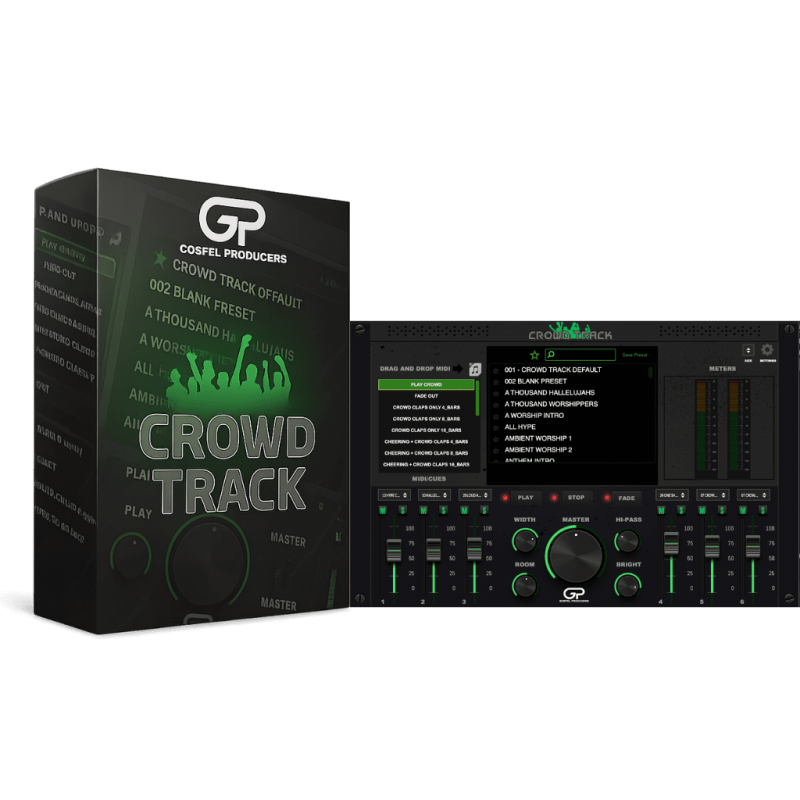
The plugin is a crowd engine on a dedicated track. Applause, movement, chants, and reaction cues go around an arrangement you already have. Mix controls cover room, width, brightness, and FX. You can fade, play back, and place hits where the song opens instead of running one stereo file from bar one.
You get 50+ crowd recordings, 6 blendable layers, 70+ presets, and 20+ reaction cues. Retail is $79. Sale is $40. I would call that cheap for a music plugin, as long as you accept it is samples, not a synthesizer. The ReverBay page is Crowd Track VST audience plugin for live mixes. Related tools sit in VST Plug-ins.
John Mike and the rest of the rack
Gospel Producers exists because church players wanted better tools without leaving the church sound. John Mike founded it around that split: creativity on one side, session-ready patches on the other. Loop Track (free, 5/5) covers drums. Guide Track covers live cues. Peculiar Sounds V2 is the keyboardist’s instrument. Loop Elements Pro is the loop writer. Juice by DLO is the flavor plugin. Crowd Track is the seats.
I care because generic libraries do not know a sanctuary from a festival. Church energy is late and messy. A gospel developer is more likely to sample that. We already went deep on the keys side in the Peculiar Sounds V2 VST review.
First pass in the plugin
The UI is a performance panel. Presets get you a usable crowd. Layers thicken it. Cues place the spikes. If you wanted two million micro-variations, you opened the wrong tool. Studio engineers will automate width into a chorus. Live operators will fire cues on the last tag. Neither job needs a 30-minute design detour before service.
Formats: AU, VST3, AAX on compatible systems. OS: Windows 10+ and macOS, Intel and Apple Silicon. Floor: 4 GB RAM, 1280 x 1024 display. Install is a standard scan. For the format itself, Steinberg keeps a public VST3 reference. I put it on a studio template and a playback session without changing much.
Realism check
Applause here is congregation texture, not concert sparkle. Density is good after a preached line. If you need arena-scale clapping, you may want more than this. If you need a sanctuary answering the choir, you are closer.
Chants are gospel-usable when they are short. A shout after a run can feel right. A looping chant under a quiet verse feels like a joke. I spotted them like crowd mics on a live multitrack. I did not park them as a bed.
The 6-layer workflow is how you avoid the pasted-on sound. A quiet bed plus a few cues follows the arrangement. One preset, one fader, no movement, and you will hear the loop. Width and room are the mixer’s friends. Brightness too, because a harsh crowd fights the vocal’s air.
Limits are real. You shape included recordings. You do not build a crowd from your own clap. After several projects the reactions start to feel familiar. Crowd Chamber will keep sound designers busier. When the brief is “this has to be our people,” you still need mics in the room.
Live playback and album work
On a dry hall recording, I added applause after the tag and a little movement under the vamp so it did not sound like a rehearsal. On a backing track, I kept verses thinner, then let Crowd Track bloom when the room was supposed to explode. That contrast sold the lift better than a constant bed. On a choir album, I treated the plugin like extra room. If it covered diction, I pulled it.
I bus the crowd so I can duck it under spoken moments. CPU is not the story. It is light enough for a live laptop if the rest of the rack is reasonable. Recording your own congregation is better and slower. Generic SFX is faster and usually the wrong tone. Crowd Track is the middle path: DAW-native, church-aimed, done in minutes.
Crowd Track VST Review against Crowd Chamber and the rest
Crowd Chamber is a layering lab. Nearly two million layers if you push it. Brilliant for design. Clumsy if you just need church applause on bar 72. Boom Library Crowd Concert Audiences is expensive post material. Native Instruments’ Jacob Collier Audience Choir is free singing, not applause, and not full live energy.
Worship and gospel producers pick Crowd Track because it is $40 on sale and already in the session. That beats a research project when the mix is due tonight. It will not replace a field recording. It will replace the hour you were going to waste conforming trailer files.
The trade
Take it if you finish worship mixes, choir records, or live playback and you need crowd energy without hanging mics. Leave it if you want synthesis-based crowd creation, or if you need language that only your room would shout.
Final score: 8.5/10. This Crowd Track VST Review lands on a qualified yes. Keep it off the verses. Hit the lifts. Then the mix stops sounding like a closet.
Get Crowd Track VST on ReverBay
If you have run Crowd Track on a choir mix or a Sunday playback session, drop how you ride it. I want the gain-staging notes, not the marketing adjectives.
