

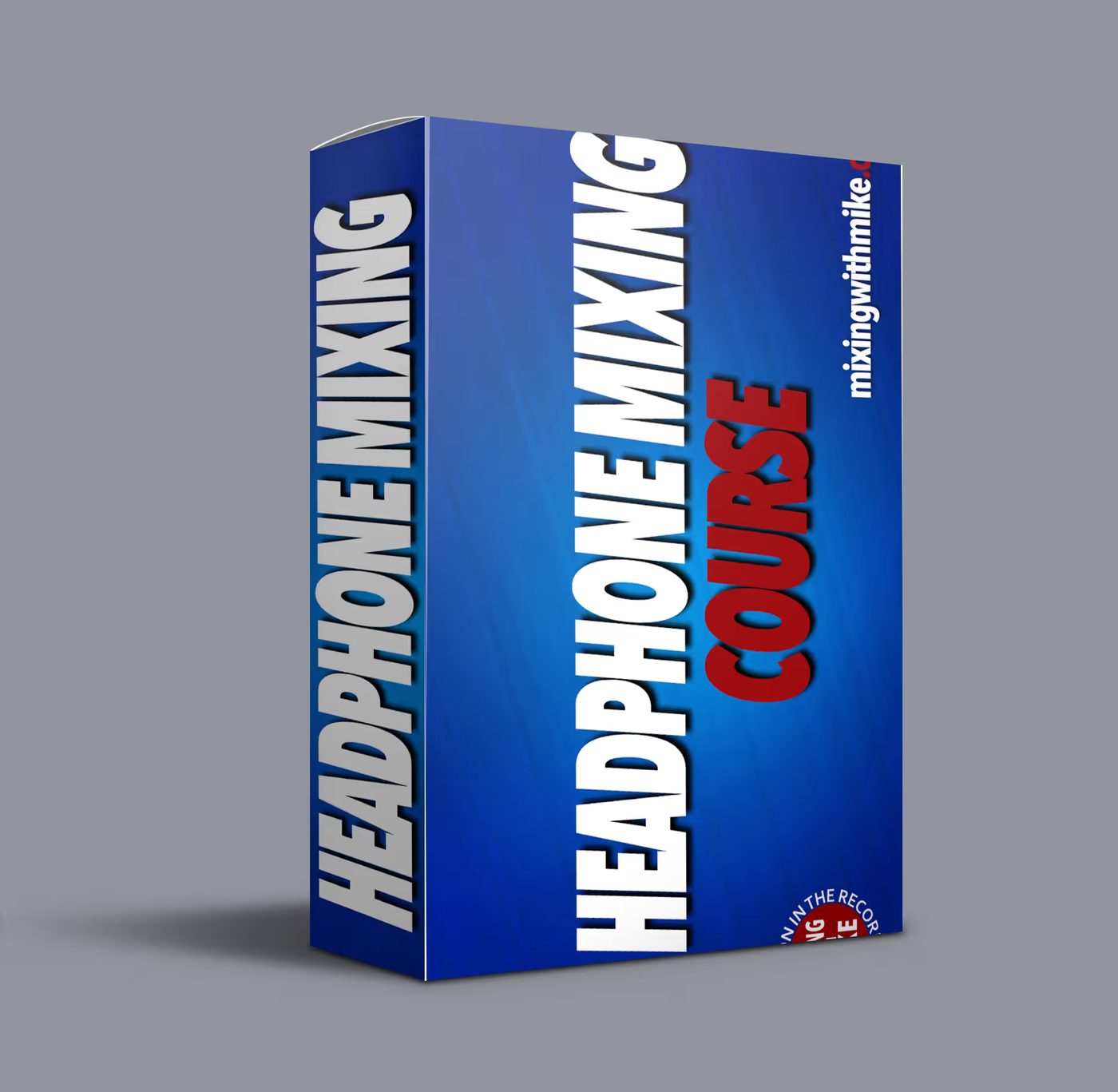
Mixing With Mike – Headphone Mixing Course

Original price was: $99.00.$59.00Current price is: $59.00.
ℹ️ New to ReverBay? Learn how it works →
Mixing With Mike – Headphone Mixing Course. A practical course for producers without treated rooms. Master translation, EQ, compression, and spatial techniques on headphones.
Headphone Mixing Course
The Headphone Mixing Course teaches you how to build professional-sounding mixes entirely on headphones. Whether you work on speakers sometimes or mix exclusively on cans, this course gives you repeatable techniques so your mixes translate accurately across both.
What You’ll Learn
Mixing on headphones comes with unique strengths and blind spots. This course covers every stage from initial level-setting through final mix-buss processing, with dedicated attention to the translation issues that trip up headphone-only mixers.
Course Curriculum
Class 1: Mixing With Headphones
Headphones give you advantages over speakers but also introduce issues you need to understand. This class covers the essentials.
- Headphone History and Experience With Headphones
- Types of Headphones
- Impedance and Sensitivity
- Head Related Transfer Function (HRTF)
- Assessing Your Headphones
Class 2: Headphone Software
An overview of available headphone enhancement software and how to integrate it into your workflow.
- Headphone EQ Calibration Software
- Basic Binaural Compensation Software
- Mix Room Simulation Software
- Monitor Simulation Software
- Strategies for Integrating Headphone Software
- Bonus Reviews: Re-Head, CanOpener, Waves NX, Abbey Road Studio 3, Ocean Way Nashville, CLA NX, Immerse by Embody, dSONIQ Realphones, dearVR Monitor
Class 3: Listening Exercises for Headphones
Develop conscious awareness of imaging, depth, and separation for your specific headphone model.
- The Sound Field Inversion Principle
- Building a Headphone Monitoring Playlist
- Frequency Response Characteristics
- Compression Characteristics
- Depth and Space Characteristics
- Integrating Headphone Software
Class 4: The Primary Sound Field (Levels and Panning)
Learn how to translate level and pan decisions through headphones.
- Headphone Tuning Exercise 1: Sound Field Perception
- Levels and the Front-Back Sound Field
- Panning and Width Adjustments
- Integrating Monitoring Software
- Balancing Between Headphones and Speakers
Class 5: Frequency Balancing for Headphones (EQ)
Frequency balancing is the toughest technique on headphones. Proximity to the eardrums creates a false sense of density, especially in low frequencies.
- Headphone Tuning Exercise 2: Frequency Balance and Height Perception
- The Bottom-Up Approach to EQ on Headphones
- Low and Low-Mid Frequency EQ Techniques
- Midrange EQ Techniques for Localization
- Balancing the High-Frequency Spectrum
Class 6: Density and Imaging Quality (Compression)
Density and imaging translate differently through headphones than speakers. Get your mix working in both worlds.
- Headphone Tuning Exercise 3: Density and Imaging Perception
- Primary Sound Field Placement With Compression
- Stabilizing Compression Techniques
- Parallel Compression Techniques
- Saturation for Density and Imaging
Class 7: Creating Space (ER, Reverb and Effects)
Understanding the Sound Field Inversion Principle is critical when creating space with reverb and effects on headphones.
- Space and the Sound Field Inversion Principle
- Headphone Tuning Exercise 4: Perception of Space
- Early Reflections in Headphones
- Reverb in Headphones
- Delay Effects in Headphones
- Immersive Enhancements
Class 8: Headphone-Speaker Compatibility
Techniques to make your headphone mix translate effectively to speakers.
- Headphone Tuning Exercise 5: Control Room Software Monitoring
- Selecting Your Control Room and Speaker Setup
- Translating Level, Pan, EQ, Compression, and Reverb Settings
- Checking Against Alternate Monitor Setups
Class 9: The Automation Process in Headphones
Automation shapes the flow of a production. Bridge the translation gap between cans and speakers.
- Headphone Tuning Exercise 6: Automation in Headphones
- Automation for Foundational, Sectional, and Transitional Tracks
- Automation for Lead Instruments and Effects
Class 10: Finishing the Mix With Headphones
The final glue lives in mix stem and mix buss processing. This class integrates headphone and control room monitoring to finish the job.
- Mix Stem and Mix Buss Processing
- Harmonic Processing, Compression, EQ
- Using Maximizers
- Final Compatibility Checks
- Course Wrapup
✓ What’s Included
- ✓ 10 full video classes covering calibration, levels, EQ, compression, space, automation, and translation
- ✓ 6 headphone tuning exercises to calibrate your ear for each stage of the mix
- ✓ Downloadable PDF workbook with module-by-module exercises
- ✓ Headphone EQ cheat sheet (printable reference)
- ✓ Translation checklist for comparing headphone mixes against speaker playback
- ✓ Bonus software reviews: CanOpener, Waves NX, Abbey Road Studio 3, and more
- ✓ Lifetime access — watch and re-watch at your own pace
- ✓ Works with any DAW and any closed-back or open-back headphones
The Headphone Mixing Course exists because too many engineers mixing on headphones end up guessing at adjustments that have straightforward, teachable answers. A mix that only works in your cans is not finished — it is untested. This course gives you the listening skills, translation checks, and workflow strategies to lock in a mix with confidence.
Frequently Asked Questions
Related products

Music Video Lessons & Tutorials

Music Video Lessons & Tutorials
Jay Cactus The Drill Production Course 2 – Complete Drill Beat Training

Music Video Lessons & Tutorials